If you run a business on the Treasure Coast, you already know the rhythm. Every year the season arrives, the forecast cones start appearing, and you wonder what to do about your marketing. Do you keep your ads running? Pause them? What if you're closed for days?
This is a calm, practical checklist for running Facebook ads through hurricane season, for Florida small business owners who'd rather plan ahead than scramble. It's written by people who live here, and it's built around one idea: during a storm, being helpful matters more than being promotional.
Hurricane season is a planning season, not a panic button
The Atlantic hurricane season runs from June 1 to November 30, according to the National Hurricane Center. If you're reading this in late October, the season is almost over, but it's not over, and it's the best time to write down your plan for next year while the details are fresh.
The goal isn't to build a "storm campaign." It's to make sure your ads never get in the way of your customers, your community or your reputation when it matters most.
What Meta's rule is aiming at
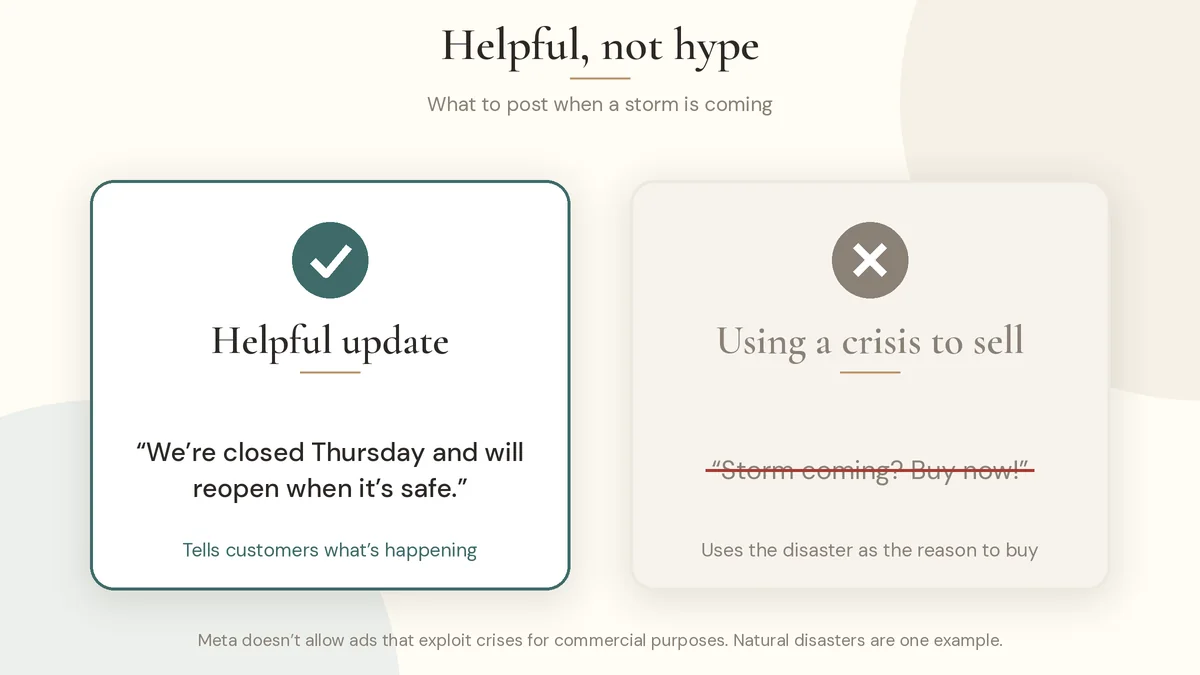
Meta's advertising standards include a policy on commercial exploitation of crises and controversial events. It says Meta doesn't allow ads that exploit crises or controversial events for commercial purposes, and it lists natural disasters as one example. Meta decides which events the policy covers. In plain English: ads shouldn't take advantage of a disaster to make money.
We won't tell you what Meta will or won't approve, because only Meta can, and its policies change. Read the current page yourself before you run anything storm-related. And if you're ever unsure, the safer choice is simple: don't run an ad about the storm itself.
There's a big difference between a helpful hours update ("we're closed Thursday and will reopen when it's safe") and an ad that uses a crisis to sell ("Storm coming? Buy now!"). The first is good business. The second is the kind of thing that hurts trust, and may cause trouble with the ad platform.
Before a named storm
When a storm is in the forecast, the first move for storm week isn't an ad. It's your basics:
- Update your hours and contact info on your Facebook Page, Instagram, Google profile and website. If you'll be closed, say so clearly.
- Post organically to let customers know your plans: when you're closing, how to reach you, and when you expect to reopen. A plain, friendly update is enough.
- Check what's scheduled. Scheduled posts, automated replies and ads set to go out can sound strangely cheerful in the middle of a storm. Review them.
- Keep promotional ads honest and low-key, or pause them (more on that next).
During evacuation, or when you can't serve customers
If you're closed, evacuating, or can't deliver your service, advertising for new customers doesn't make sense. Consider:
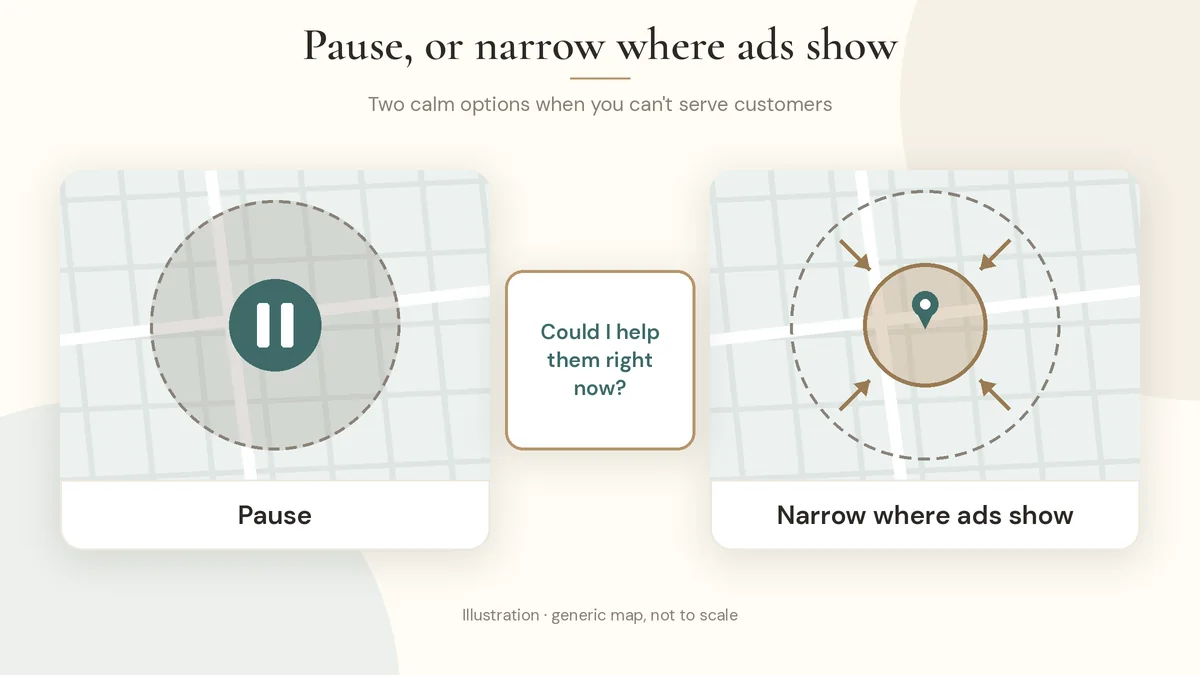
- Pausing your campaigns in Ads Manager until you can serve people again.
- Or narrowing where they show so you're not promoting to areas you can't reach.
- Avoiding urgency and fear in anything you do publish. No "last chance," no countdowns, nothing that plays on worry.
If you're not sure whether to pause, ask yourself: if a customer clicked this right now, could I help them? If the answer is no, pause.
Want a second pair of eyes on your plan before next season? Get a free ad audit and we'll look at your setup and help you write down what to pause, what to keep running and what to post.
After the storm: restarting your Meta ads
Once it's safe and you're back to normal operations, you can restart. But how you restart matters:
- Come back only with what you can actually deliver. If you're still short on staff, supplies or schedule, don't promise what you can't do.
- Keep your prices fair. Florida has price gouging rules that can apply during a declared emergency. Check the Florida Attorney General's price gouging page for current guidance rather than relying on a blog post, and talk to a professional if you're unsure.
- Start gently. A simple "we're open again" message is a good first ad. Save the promotions for later. A modest budget that builds back up is usually easier to manage than a big restart; our guide to what Facebook ads cost in Port St. Lucie explains how to think about it.
- Keep it human. A lot of your neighbors are dealing with real problems. Warm and helpful tends to land better than clever.
Who this matters most for
Anyone with a storefront should have a plan. But it matters even more for home services and contractor businesses, such as roofing, AC, pavers, pools and similar trades, where demand can change fast after a storm. That's the moment to be the most careful and most tasteful, never a "storm chaser." We cover advertising for contractors in a separate guide. If you run a restaurant, keep your hours current first; once you're back open, our guide for restaurants in Stuart and Jensen Beach covers how to fill tables again.
Build your storm-week ad checklist now
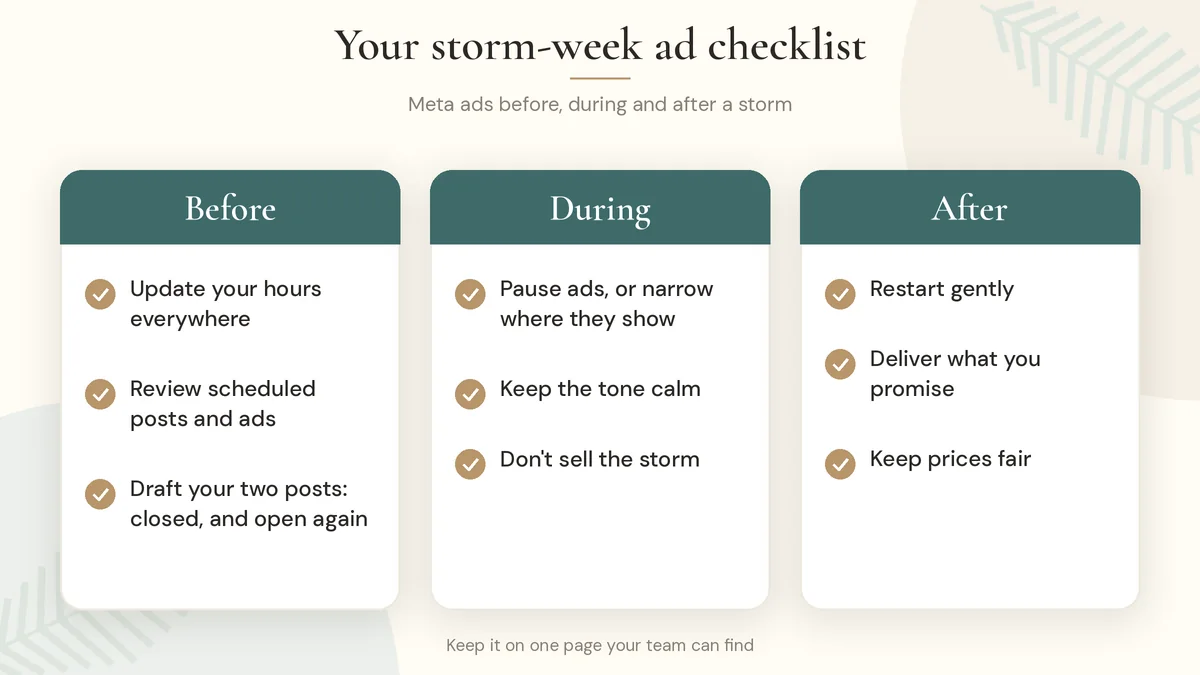
The best time to write your plan is when nothing is happening. Put this on one page and keep it somewhere your team can find it:
- Who decides when to pause ads, and who has the login?
- Where you update hours first (Page, Instagram, Google profile, website).
- What's scheduled that could go out at a bad time, and how to stop it.
- A draft "we're closed" post and a draft "we're open again" post, ready to edit.
- Your restart rules: what you'll promote first, and what you'll leave alone.
If you already use a simple seasonal calendar, hurricane season fits right next to your snowbird season plan. And if you're not sure whether to boost a quick hours update or build a proper campaign, our boost post vs Ads Manager guide can help. Late in the season, storm prep also overlaps with the holidays, so if you're planning November and December, see our dated holiday Facebook ads plan.
A free ad audit, before next season
Here's what we feel strongly about. You have enough to worry about when a storm is coming. Your ads shouldn't be one of those worries.
At Viralux Advertising, we run Facebook and Instagram ads for Treasure Coast businesses. We live here, so we know the area. You pay Meta directly for your ad spend, with a flat fee from us and no long contracts.
Get a free ad audit and we'll walk through your setup and help you plan ahead (here's what the audit covers). Or book a free consultation to talk it over. You can also call 801-614-3820. There's no rush and no pressure. It's just a good time to plan.
Frequently asked questions
Can I run Facebook ads during a hurricane? You can, but it often doesn't make sense. If you're closed or can't serve customers, pausing is usually the better call. If you do publish something, make it helpful, like an hours update, rather than promotional.
Does Meta ban hurricane-related ads? Meta doesn't allow ads that exploit crises or controversial events for commercial purposes, and it lists natural disasters as an example. Meta decides which events count and what crosses the line, so read the current policy before running anything storm-related.
Should I pause my Facebook ads when a storm approaches? If you'll be closed, evacuating or unable to serve customers, pausing is a sensible choice. If you stay open and your ads are routine, you can often keep them running, with a quiet tone. When in doubt, pause.
How do contractors advertise after a hurricane without breaking Meta's rules? Carefully. Stay helpful and honest, keep prices fair, and don't use the storm itself as your sales hook. Read Meta's current policy, and check state guidance on pricing during emergencies.
When does Atlantic hurricane season start and end? June 1 to November 30, according to the National Hurricane Center.
What's the difference between a helpful hours update and an ad that exploits a crisis? An hours update tells customers what you're doing and how to reach you. An exploitative ad uses the disaster as a reason to buy. The first builds trust, and the second erodes it.