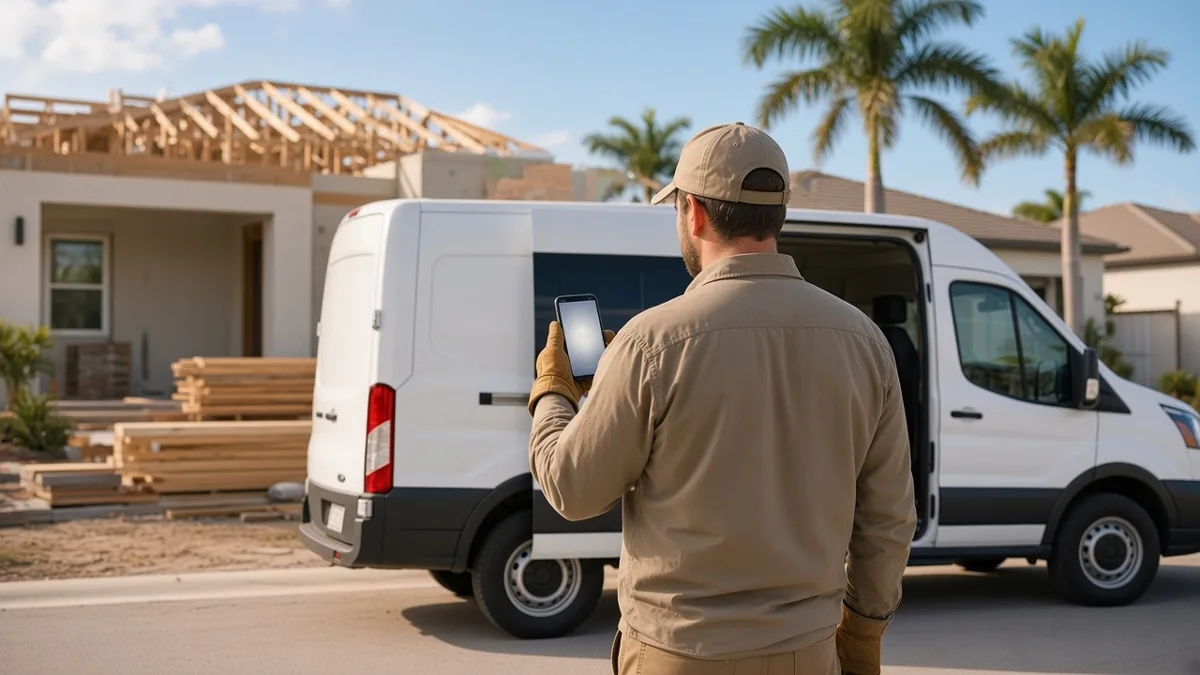
Picture a Treasure Coast owner on a roofing job. At 2:14 PM a new Facebook lead comes in. The owner sees the notification, thinks "I'll call after this," and calls back at 7 PM. By then the customer has talked to someone else and booked them.
Nothing went wrong with the ad. The ad did its job. The lead just went cold.
That's what speed to lead is about: how fast you respond to a new inquiry. Ads buy you the chance to talk to someone. Speed is what keeps it. This post covers what the best-known study on the subject found, what it doesn't prove, and a simple plan you can run with a small team or just yourself.
What the Harvard study actually found
The study everyone cites is "The Short Life of Online Sales Leads," by James B. Oldroyd, Kristina McElheran and David Elkington, in Harvard Business Review, March 2011. The full text is behind a paywall, but here's what the authors reported.
First, how companies responded. The researchers audited 2,241 U.S. companies by submitting a test lead through each company's website. Here's how fast those companies answered:
| How fast they responded | Share of companies |
|---|---|
| Within an hour | 37% |
| 1 to 24 hours | 16% |
| More than 24 hours | 24% |
| Never | 23% |
Among the companies that did respond within 30 days, the average response time was 42 hours.
Second, what speed did to results. In a separate dataset of 1.25 million leads at 29 B2C and 13 B2B U.S. companies, firms that tried to contact a lead within an hour were nearly 7 times as likely to qualify it as firms that waited even an hour longer. They were more than 60 times as likely to qualify it as firms that waited 24 hours or more. In the study, "qualify" meant having a meaningful conversation with a key decision maker.
Now the caveats, and they matter.
- The study is from 2011.
- It's about web leads, mostly at larger companies.
- "Qualify" means a real conversation, not a sale.
So treat it as a clear direction, not a promise for your business. A faster response doesn't guarantee a job. It does mean you're in the conversation while the customer is still looking.
You may have seen other numbers floating around, like "5 minutes" or "100 times" or "78% buy from the first responder." We don't use them here. They show up all over the internet without a primary source we could check.

Why speed matters even more for local service businesses
We don't have a study for this part, so we'll just give you our reasoning.
When someone's air conditioner dies or a pipe starts leaking, they don't contact one company. They contact a few. They aren't browsing. They want it fixed. The first company that has a real conversation with them has the edge, because the customer can stop calling around.
Even outside emergencies, people reach out to a few businesses and go with the one that feels responsive. It's the same story with a daycare. Our post on Facebook ads for daycares in Port St. Lucie makes the point from a different angle: the ad gets a parent to raise a hand, and then you decide who responds, how fast, and what they say.
Two kinds of leads, two plans
Not every lead arrives the same way, and the plan for each is different.
Form leads (Facebook instant forms)
When someone fills out a form inside Facebook or Instagram, the lead sits in a list until a person reaches out. That person is you, or whoever owns follow-up on your team.
So plan for it:
- Who gets the notification? Meta can notify you when a new lead arrives. Turn that on, and make sure it goes to someone who will see it on a job site.
- Who calls? One named person, not "whoever's free."
- What do they say? A short script helps. See the checklist below.
- What's the time target? For example, within the hour during business hours.
To be clear, Gary does not call or text form leads. He's a phone-answering receptionist. Following up on form leads is on you or your team.
Inbound calls
These come from call-button ads, your Google listing, or someone calling the number from your ad. This is where Gary, our AI receptionist, fits.
Gary answers every call right away, 24/7, in English or Spanish, and tells callers up front that he's an AI. Hot calls go straight to your phone, or to an on-call partner. If nobody picks up, he takes the caller's name, number and job details, and you get an email lead summary right after the call.
A tip for owners who can't call back fast
If you're on job sites all day, a call-focused ad (one with a "Call now" button) plus an always-answered phone may suit you better than a form you'll get to tonight. We'd call that an option to consider, not a promise of better results. Our guide on boosting a post vs. using Ads Manager explains how the objectives differ.
A simple speed-to-lead plan for a small team
Here's a checklist you can start this week. It works with two people or twenty.
- Turn on lead notifications, and send them to a phone that's always with someone.
- Name one owner per lead. If everyone's responsible, nobody is.
- Write a three-line callback script. Say who you are, why you're calling ("you asked about a quote on Facebook"), and one question to start the conversation.
- Call first, then message. If they don't pick up, leave a short voicemail and send a brief text from your own phone. Keep it human.
- Decide what happens after hours. Will leads wait until morning? Will somebody check at 8 PM? Will your phone be answered? Our post on after-hours answering services compares the options.
- Plan more attempts over the next few days. Many people don't answer the first time. That's you following up, not Gary.
- Track it. In a simple sheet, add a column: "Contacted within an hour? Yes/No." That one column tells you a lot.
- Review weekly. Look at the "No" rows and ask why.
How to know if slow follow-up is the problem
Slow follow-up is easy to miss, because the ads look fine. A few signs to watch for:
- Lots of leads, few conversations. You're getting names and numbers, but not many people actually talk to you.
- Leads say "I already hired someone." That's often a sign somebody else got there first.
- Your tracking sheet shows long gaps between the lead arriving and your first call.
If you're not sure, a free ad audit looks at the ads and at the follow-up path behind them. We'll tell you what we see, even if the answer is that your ads are fine and your phone is the issue. For context on what a lead costs, our post on what Facebook ads cost in Port St. Lucie covers cost per lead.
A local example
When a Treasure Coast preschool ran its first campaign with us, the plan included a quick personal follow-up from the director, and the result was 8 enrollments from about $800 in ad spend. Results vary by business, offer, season and budget. Past results don't guarantee future ones. We're not saying speed alone caused that. We're saying follow-up was part of the plan from the start.
Frequently asked questions
What is a good lead response time? The Harvard Business Review study found that firms that contacted leads within an hour fared much better than those that waited longer. Sooner is generally better. We won't give you a magic number of minutes, because we don't have a verified source for one.
What is the Harvard speed-to-lead study? It's a 2011 Harvard Business Review article, "The Short Life of Online Sales Leads." The authors tested how fast companies responded to web leads and looked at how response time related to the chance of having a real conversation with a decision maker.
How should I follow up with Facebook leads? Call first, then send a short message, then try again over the next few days. Keep it practical and personal. Know who owns it, and track whether you reached people within the hour. Our post on boost post vs. Ads Manager explains the lead objective options.
Can an AI receptionist help with speed to lead? For inbound calls, yes. Gary answers instantly and live-transfers hot calls to your phone or an on-call partner. For form leads, no. Gary doesn't call or text people back, so a person on your team has to do that.
Want a second set of eyes on your leads?
Tell us how your leads come in and what happens next, and we'll tell you where we'd tighten it up. Get a free ad audit or book a free consultation. You can also call or text Jared at 801-614-3820.
Want to hear how a call gets answered at any hour? Call Gary's demo line at (469) 482-5580.
Jared Montgomery, Viralux Advertising, Treasure Coast, Florida.