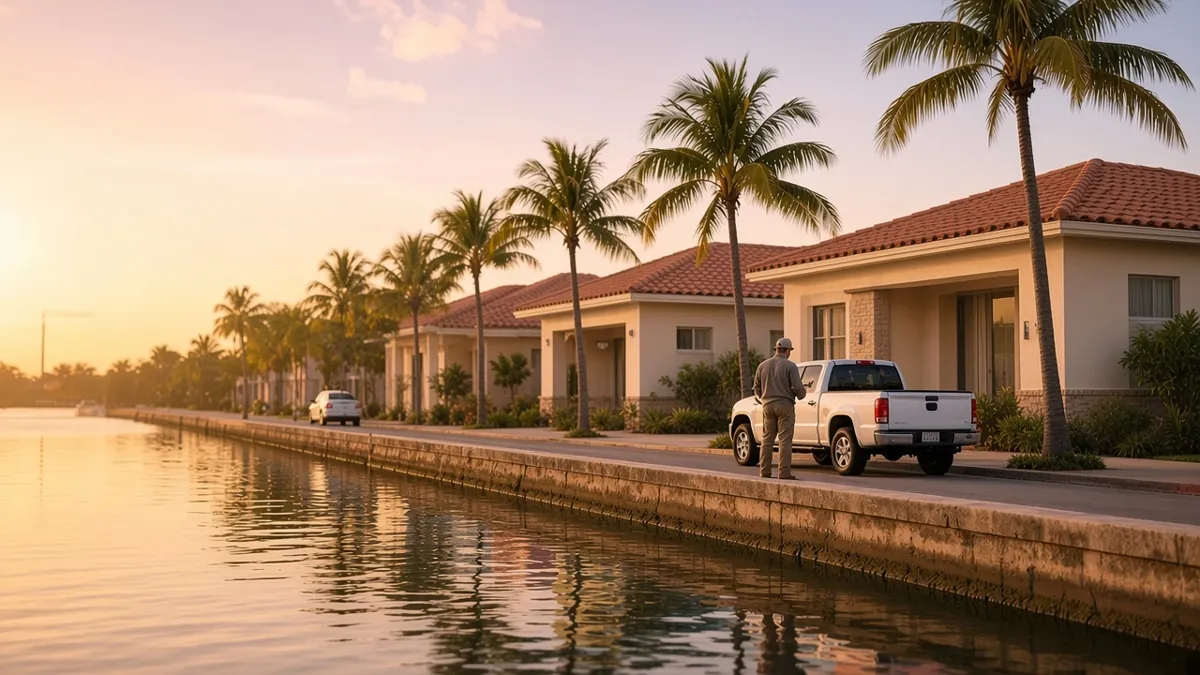
If you run a roofing, paver, AC or pool company on the Treasure Coast, you don't need us to tell you how this business works. You're on a roof, under a house or knee-deep in a pool equipment pad, and the phone rings anyway. You can't pick up. The caller moves on to the next name on the list.
Facebook and Instagram ads can fill your calendar with the right local jobs. But the ads are only half of it. The other half is what happens when somebody calls. We live here, and we run Meta ads for local businesses from Jupiter to Melbourne. This is how we think about it for the trades.
Why Facebook works for trades where one job pays for the ads
A roof, a driveway, a replacement AC system or a pool remodel is a big job. When one job is worth that much, you don't need a flood of leads. You need the right homeowners in your service area to see you at the moment they're thinking about the project.
We're not putting a number on any of this. We don't have a figure for what a job is worth to your business, and you know it better than we do. Do the math on your own average job, and you'll know how much a single good lead is worth to you.
Targeting across St. Lucie, Martin and Indian River counties
For most Treasure Coast contractors, the core of the service area is St. Lucie, Martin and Indian River counties, and we run ads from Jupiter to Melbourne. The trick is to draw your targeting around where you actually work, not around the whole map.
- Start with your service area. Use a radius or a list of towns, based on where your crews can get to without losing the day.
- Check where your best jobs came from. If most of your pavers are in Port St. Lucie and Tradition, don't spend on Vero.
- Keep your radius honest. A lead 45 minutes away is a lead you probably won't close.
Our area pages explain how we run ads in each part of the coast: Port St. Lucie, Stuart, Fort Pierce and Vero Beach. The full list is on our areas page. Meta's targeting options change, so we check the current settings every time we set up a campaign.
Before-and-after creative and job-site video
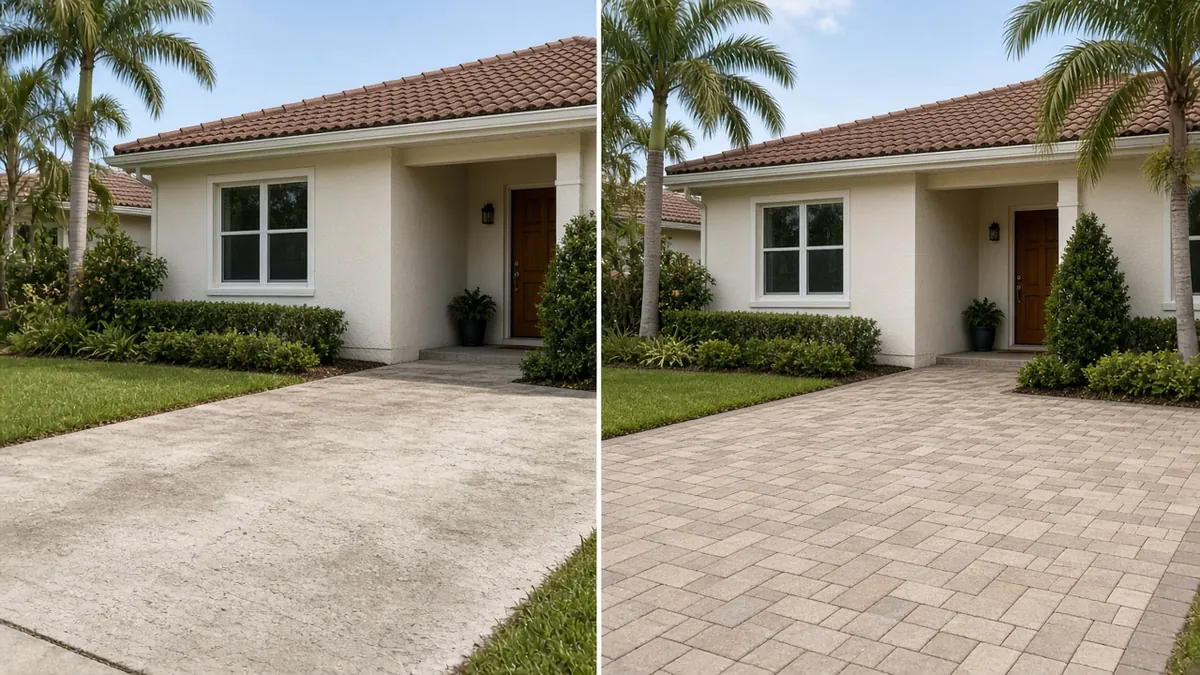
Trades have an advantage on Facebook: the work looks great. A paver driveway going from cracked concrete to a clean new pattern. A roof going from stained and worn to finished. A pool going from green to clear.
Use your own photos and short vertical video from your own jobs, and get the homeowner's permission before you post their home. A few pointers:
- Shoot from the same angle, before and after.
- Show your crew and your truck. People are letting you onto their property.
- Keep video short. Fifteen to thirty seconds is enough.
- Don't use stock photos of someone else's work.
Lead form or call objective? Which fits roofing, pavers, AC and pools
There are two simple ways to let a homeowner respond. An instant form lets them leave their details inside Facebook or Instagram. A call ad puts a call button right in the ad.
- Lead forms fit jobs where the homeowner wants to describe the project first: a paver driveway, a pool remodel, a roof replacement quote.
- Call ads fit jobs where the homeowner wants an answer now: an AC that quit, a leak, something urgent.
Many contractors run both, as separate campaigns. We cover the difference between the ad goals in our guide to boosting a post vs. using Ads Manager.
Form questions that qualify leads
A form that asks too much loses people. A form that asks too little fills your inbox with tire-kickers. Aim for three or four questions:
- What kind of project? (Roof, pavers, AC, pool.)
- When do you want to start? (Timeline.)
- What town are you in?
- Name and phone number.
Those three answers tell you whether the lead is worth a callback, and they cost the homeowner about thirty seconds. Don't ask for things you don't need, like a full address or a budget.
Want a second opinion on your ads or your form? Get a free ad audit. It's free, and you get the findings either way.
Speed to lead: the callback is half the campaign
Here's what we tell every contractor: the ad is only half the campaign. The other half is how fast you call back. A homeowner who fills out a form at 7 p.m. is probably filling out three, and the first call back often wins the conversation.
The hard part is that your calls come when you can't pick up. Mid-day, you're on a roof. At night, you're off the clock. Weekends, you're at your kid's game. And in this business, the calls that matter most are often the ones that come after hours: a Saturday-night AC failure in July, a leak that starts at dinnertime.
What happens to the calls you miss
Every missed call is a homeowner who probably called the next company. There are a few ways to handle it:
- Voicemail. Free, and fine if few of your calls are urgent. The caller has to wait for you, though, and someone with a dead AC often won't.
- A live answering service. A real person answers. Usually priced by the minute or the call.
- An AI receptionist. Software that answers with a natural-sounding voice, day or night.
We sell an AI receptionist, so weigh that. Gary is our done-for-you AI receptionist. He answers 24/7 in English and Spanish, and tells callers up front that he's an AI. You tell us in setup what counts as an emergency, such as no cooling or a leak, and Gary live-transfers those calls straight to your phone or an on-call partner while the customer is still on the line. If nobody picks up, he takes the caller's name, number and job details, and you get an email summary and a new row in a Google Sheet. You keep your number, because you forward your existing line.
Gary books appointments directly on your calendar during the call. He does not send texts. He still answers, transfers emergencies and takes details when a booking isn't what the caller needs. And we don't have client results for him to show yet, so we'd rather you hear him yourself than take our word for it. Our honest guide to choosing an AI receptionist compares him with other options, including cheaper do-it-yourself tools that may fit you better, and you can call the demo line at (469) 482-5580 to hear Gary answer.
If you'd like help figuring out how many calls you're missing, you can ask for a free missed-call audit. Our after-hours answering service guide walks through voicemail, live operators and AI.
Seasonal and storm-related demand
The Treasure Coast has its own rhythm. Snowbird season brings returning homeowners who want things fixed before they settle in, and our snowbird season playbook covers how to plan ads around it. Summer heat means AC calls. And hurricane season brings the busiest and most sensitive weeks of the year.
A few ground rules for storm weeks:
- Don't exploit a disaster. If a storm is bearing down on your neighbors, this is not the time for a flashy "Book now!" ad.
- Pause or switch your messaging when it makes sense, and be useful instead: how to prepare, how to reach you for emergencies.
- Be ready for the phones. Storm weeks mean everybody calls at once.
Our guide on running ads through hurricane season covers this in more detail.
What contractor ads cost
It depends on your trade, your service area, the season and the size of the job. We won't make up a local number for how much a roofing or paver company should spend, and nobody else can honestly give you one without knowing your business. Our post on what Facebook ads cost in Port St. Lucie shows how to think about it. Start small, and judge by real jobs booked, not clicks.
A free ad audit for contractors
If you want a local set of eyes on your ads, your form and your follow-up, we're happy to help. We'll tell you what we'd run, what we'd skip, and where calls might be slipping through.
For a sense of how a first campaign can go, a Fort Pierce preschool got 8 enrollments from about $800 in ad spend. That's a different industry and not a contractor result. Results vary by business, offer, season and budget. Past results don't guarantee future ones.
Get a free ad audit or book a free consultation. You can also call or text Jared at 801-614-3820. We're happy to meet at the job site.
For other kinds of local businesses, see our home page on Facebook and Instagram ads for Treasure Coast businesses, and read why we live here and know the area.
Frequently asked questions
Do Facebook ads work for contractors? They can, when the offer, the targeting and the follow-up are solid. We don't guarantee results.
Should I use lead forms or phone calls for home services ads? Lead forms fit project work you'd quote, like roofs, pavers and pool remodels. Call ads fit urgent work, like a broken AC. Many contractors run both.
How much should a roofing or paver company spend on Facebook ads? It depends on your trade, area, season and job size. Start small and judge by jobs booked. See what Facebook ads cost in Port St. Lucie.
How do I get better-quality leads from Facebook? Ask the right three or four questions on the form, keep your targeting inside your real service area, and call back fast. Then tell us which leads were good, so the ads can learn from that.
What happens to calls I miss after hours? Voicemail, a live answering service or an AI receptionist like Gary can catch them. Gary live-transfers the calls you mark as emergencies and takes details on the rest.
Can I run ads in Spanish? Yes. If your customers speak Spanish, we can run Spanish ads and Spanish forms.
Costs and results depend on your business, trade, season and budget, and nothing here is a guarantee. Meta's rules and options change, so check its current pages before you launch an ad. We sell Gary, so we're not a neutral party on that topic.
Jared Montgomery, Viralux, Treasure Coast, Florida. Serving Jupiter to Melbourne.